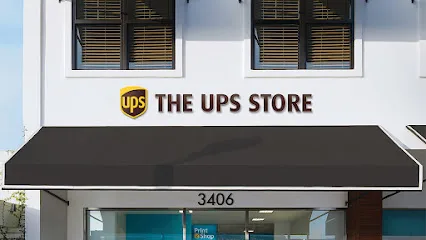
A notary request can look simple until the document, signer, identification, and timing all have to line up. The UPS Store location at 22 Parsonage St, Providence, RI 02903, United States is listed as a Walk-In Notary provider, but a walk-in label should be treated as a starting point for a call rather than a guarantee that every notarial act is available immediately. The useful decision is whether this location fits the particular signing packet and schedule.
The public listing shows a 4.0 rating from 111 reviewers, along with a phone number, +1 401-369-7029. Those details give a prospective client a concrete way to verify the current arrangement before traveling. The official location page also presents a Schedule Appointment option and separately asks whether the Notary Public is always available during all operating hours. That question is an important signal: store hours and notary availability should not be assumed to be identical.
The Providence address is useful, but availability still needs a direct answer
For someone already working near downtown Providence, the address provides a clear place to evaluate. The official page identifies the site as being on the corner of Parsonage St. and South St. It also describes the business as locally owned and operated. These facts help with planning the visit, but they do not establish that a notary can handle an unscheduled signing at any hour. A caller should describe the document type, number of signers, approximate number of signatures, and preferred timing before setting out.
That conversation is especially useful when a deadline is involved. The location page states that the store is open seven days, while also displaying separate notary-hours information. A broad store-hours statement therefore cannot answer the narrower question of whether a notary is present for a particular visit. Confirming the appointment or walk-in window, any arrival cutoff, and whether the required service is offered that day can prevent an unnecessary trip.
Document readiness determines whether a visit can move forward
Notarization is generally an in-person process built around a specific document and signature. The signer should bring the complete document packet rather than only a loose signature page, unless the receiving organization has given different instructions. Pages that require signatures should remain unsigned until the notary explains where signing must occur. Missing pages, unclear signature blocks, or incomplete information may create a problem that a notary cannot solve by changing the document.
The listing identifies common document categories such as powers of attorney, loan documents, real estate documents, medical directives, and apostille-related requests. Those categories are useful prompts for a call, not a promise that every document or circumstance will be accepted. A caller can ask whether the document has the required notarial certificate, whether witnesses are needed, whether multiple signers must attend together, and whether the notary can work with the document's language and format. The notary can perform the authorized act, but is not a substitute for an attorney deciding what a document should say.
Identification and signing conditions deserve specific questions
Before the appointment, the signer should ask which identification documents are accepted and whether each signer must present one personally. The public record flags identity requirements as part of the service conversation but does not publish a complete accepted-ID list in the supplied location material. That is a reason to verify the requirement directly instead of relying on a general assumption about a driver's license, passport, or expired identification.
Other practical details matter as well. Ask whether every signer must be physically present, whether a witness may be needed, and whether a signer who cannot understand the document or communicate with the notary can complete the process. These are eligibility and procedure questions that may depend on the circumstances and applicable rules. Clear answers before arrival are more valuable than discovering a limitation after the document is on the counter.
Apostille work is a separate document path
An apostille is not simply another name for notarization. A notary may notarize a signature or complete another permitted act, while an apostille request involves a separate authentication process and the requirements of the destination authority. The listing includes apostille among common document topics, so it is reasonable to ask whether The UPS Store is only handling the notary step, accepting documents for further processing, or offering a different intake arrangement at this location.
The caller should identify the destination country, the document type, and any stated deadline without assuming that the store can approve the final use abroad. If a receiving agency, school, court, lender, or government office supplied instructions, keep those instructions available. They may specify the type of certificate, seal, translation, or authentication sequence required. For legal interpretation or document drafting, a qualified attorney or other appropriate professional should be consulted separately.
What a well-prepared call to The UPS Store should establish
A productive call to +1 401-369-7029 can stay short while covering the decisions that matter: whether a notary is currently available, whether an appointment is recommended, what identification each signer needs, whether the document type is within the location's scope, and what the current fee or payment terms are. The official source for the location is https://locations.theupsstore.com/ri/providence/22-parsonage-st?utm_source=Yext&utm_medium=organic&utm_campaign=Listings; checking it again is sensible because services, pricing, and hours may vary by location.
The strongest reason to investigate this Providence provider is not the Walk-In Notary label alone. It is the combination of a precise address, a published contact route, a stated appointment channel, and enough service information to frame better questions. Once those answers match the document packet, the signer can decide whether an in-person visit at 22 Parsonage St is practical, or whether another notary arrangement is more suitable.