
What a notary public does
A notary public serves as an impartial witness for important document signings. Notarization helps deter fraud by verifying identities and, when required, confirming that signers understand and voluntarily agree to the transaction. In New York, the exact rules depend on the document type, but the overall goal is consistent: strengthen the integrity of records used in legal, financial, and administrative settings.
At a mobile notary office visit or a scheduled appointment, the notary typically reviews identification, administers required acknowledgments or oaths, and completes the notarial certificate using the correct format for the document.
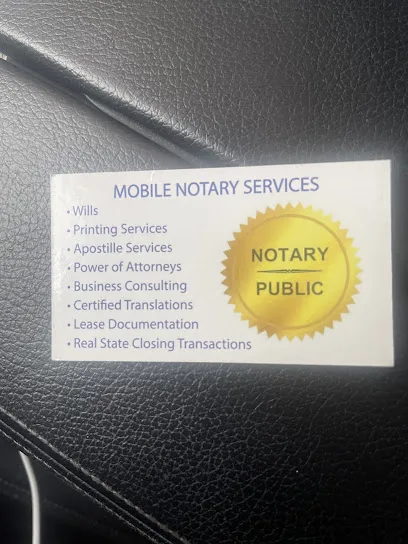
Common notarizations and when you may need one
Notarization is often required for documents that carry legal consequences, such as financial transfers, property transactions, and certain immigration or civil documents. Many clients seek notarization for:
- Power of Attorney (POA): authorizes someone to act on another person’s behalf.
- Real estate documents: deeds, affidavits, and closing-related paperwork.
- Loan documents: agreements that lenders require to be properly executed.
- Apostille preparation: certification steps that may be needed for use abroad.
- Medical directives: documents that reflect healthcare instructions or authorization.
Even when notarization is requested, additional steps may apply depending on where the document will be used. When apostille is involved, the paperwork must be prepared with careful attention to forms and signatures to avoid rework.
New York visit expectations: what to bring
Most delays come from preventable issues: missing identification, incomplete forms, or documents signed at the wrong time. Before the appointment, gather the materials below to help the notary complete the work efficiently.
- Government-issued photo ID: Bring an ID that meets notarial identity requirements.
- All pages of the document: Submit the complete packet, including any exhibits.
- Any instructions or reference letters: Some organizations provide notarization requirements, such as certificate wording.
- Payment method: Fees vary by document type, number of signatures, and whether remote or mobile service is used. Confirm pricing in advance.
If a document is intended for use in another country, ask early whether apostille certification will also be needed, because the paperwork requirements can affect how the signing and certification are completed.
Mobile notary service: scheduling and convenience
For clients who cannot travel or who need timely signings, mobile notary service can be an effective option. A mobile notary schedules an appointment at a client’s selected location within the service area, such as a home, workplace, or other agreed-upon setting, provided it allows for proper identification and completion of the notarization.
Clients are advised to plan ahead for mobile appointments by:
- Confirming the appointment time and location details.
- Ensuring all signers are available and ready with their required identification.
- Having the document packet organized to reduce interruptions.
For same-day needs, availability depends on current scheduling. Calling or messaging before the signing deadline helps determine whether an appointment can be confirmed.
Typical cost drivers and how to avoid re-signing
Notary fees generally depend on the scope of work. Common cost drivers include the type of notarization, the number of signatures and document pages, and whether remote or mobile service is used. Apostille-related requests can also add complexity due to certification handling requirements.
To reduce the risk of re-signing, clients should:
- Leave signing instructions to the appointment: Many documents must be signed in the notary’s presence.
- Verify names and dates: Ensure the printed names match the identification and the form is fully completed except for signatures.
- Bring the correct forms: If a template provided by a lender, court, or agency requires specific certificate wording, bring the exact paperwork.
Checklist before you arrive
- Bring government photo ID for each signer.
- Bring the full document packet (all pages).
- Confirm whether apostille or additional certification is required.
- Schedule mobile or in-person time with enough buffer for review.
- Ask about fee estimates based on the number and type of signatures.
With the right preparation, notarization can be completed efficiently and with fewer corrections.