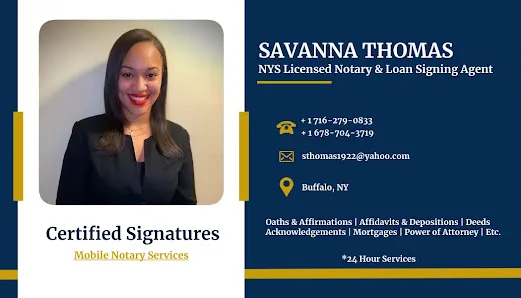
Choosing a notary is rarely about “who is available.” It’s about whether the person you call can complete your notarization the way your document packet is set up. For readers in the Buffalo area considering Certified Signatures, the safest way to start is to treat the walk-in vs. mobile question as a packet-matching problem: your pages, your signer roles, and your identity plan must fit the notarization workflow used on appointment day.
Use the right local signal: walk-in orientation for a Buffalo packet
The Certified Signatures listing identifies the service category as a Walk-In Notary and shows a public rating signal of 5.0 from 1 reviewers. It also provides a direct contact line: +1 678-704-3719. For Buffalo clients, that combination is a useful start because walk-in notarization usually means you can bring a complete packet and complete signature steps in a single visit—without coordinating travel on the day you need signatures notarized.
Still, “walk-in” doesn’t automatically mean “no planning.” You should confirm whether your particular packet can be handled as a walk-in visit (or whether mobile is offered for the same document set) and whether the provider expects signed/un-signed pages before review.
Decide your end goal before you schedule (not just “notarization”)
Most packet delays happen when “notarization” is treated like the whole end goal. Ask what the receiving organization actually needs: a specific notarization type (acknowledgment vs jurat), whether additional statements must be completed, and how many signers must be processed in the same session. If apostille or authentication is part of your larger plan, you still must align your packet to notarization first—then confirm what comes next with the agency that requires it.
Identity verification: the part that can’t be negotiated
Notarization day hinges on identity verification. Before you arrive, clarify ID requirements for each signer and any edge cases that commonly create delays: name differences, recent address changes, or documents with multiple parties. If your signer situation is complicated, ask whether the provider can handle that scenario in a walk-in format, or whether mobile coordination is needed so the correct signer identities can be verified without interruption.
Build a packet reality check to prevent rework
Bring (or prepare) your packet like a checklist—page order matters, signature placement matters, and “nearly complete” forms often aren’t complete enough. Review internally:
• Are you bringing every page the notary will need to review and stamp?
• Are signature lines, initials, and dates where they should be?
• Do you have any supporting exhibits or instructions provided by the receiving party?
When clients skip this step, the most common outcome is rework: a missing page, a signature in the wrong location, or incomplete wording that must be corrected before a stamp can be applied.
Ask three targeted questions using the Certified Signatures phone number
Use +1 678-704-3719 to confirm details that affect timing and completion. A helpful call typically covers:
1) “Can you notarize this exact packet as a walk-in appointment, and will you review the full document set before stamping?”
2) “What ID items do you require for each signer, and what do you do if there’s a name/address mismatch?”
3) “If we need more than one notarization in the same packet, how do you sequence signers to avoid delays?”
Even if you end up choosing a different visit style, these questions protect you from the same day-of problems: missing documents, incorrect signer order, and incomplete paperwork.
In short, Certified Signatures can be a workable choice when your packet is organized and your identity plan is clear. Treat walk-in as the default workflow signal, verify the notarization type your documents require, and confirm ID expectations early—so your notarization appointment can focus on signing and stamping, not repairing paperwork.